The dream
One day I stumbled upon Project Sid from research lab Altera.AL.
Altera built it: Thousands of bots living in Minecraft, specializing, forming societies. I saw it and thought: I want to try this myself.
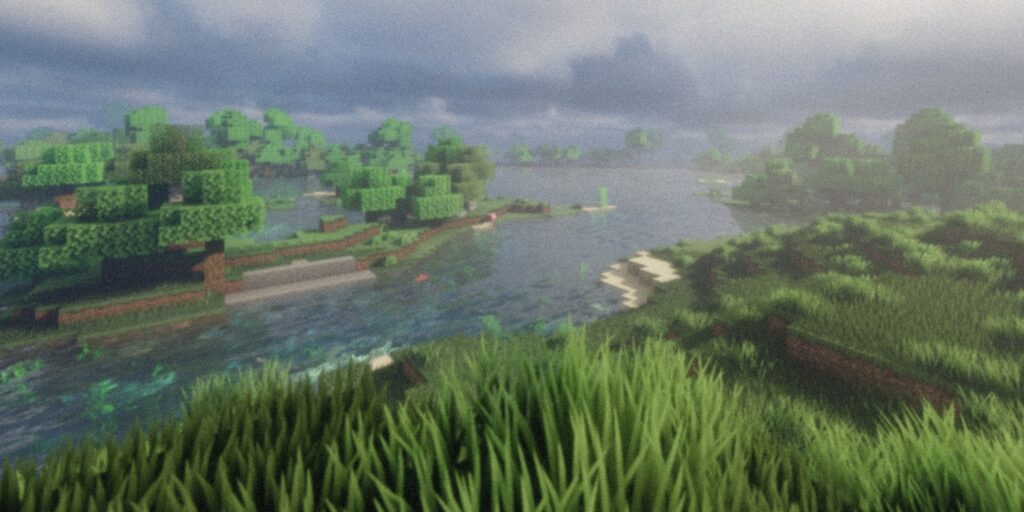
The dream was simple: Host a world locally. Join the server. Walk up to a bot, type something, talk to it. Watch how it moves through the world. Hear what it has to tell me from its own point of view. Would there be gossip about other bots?
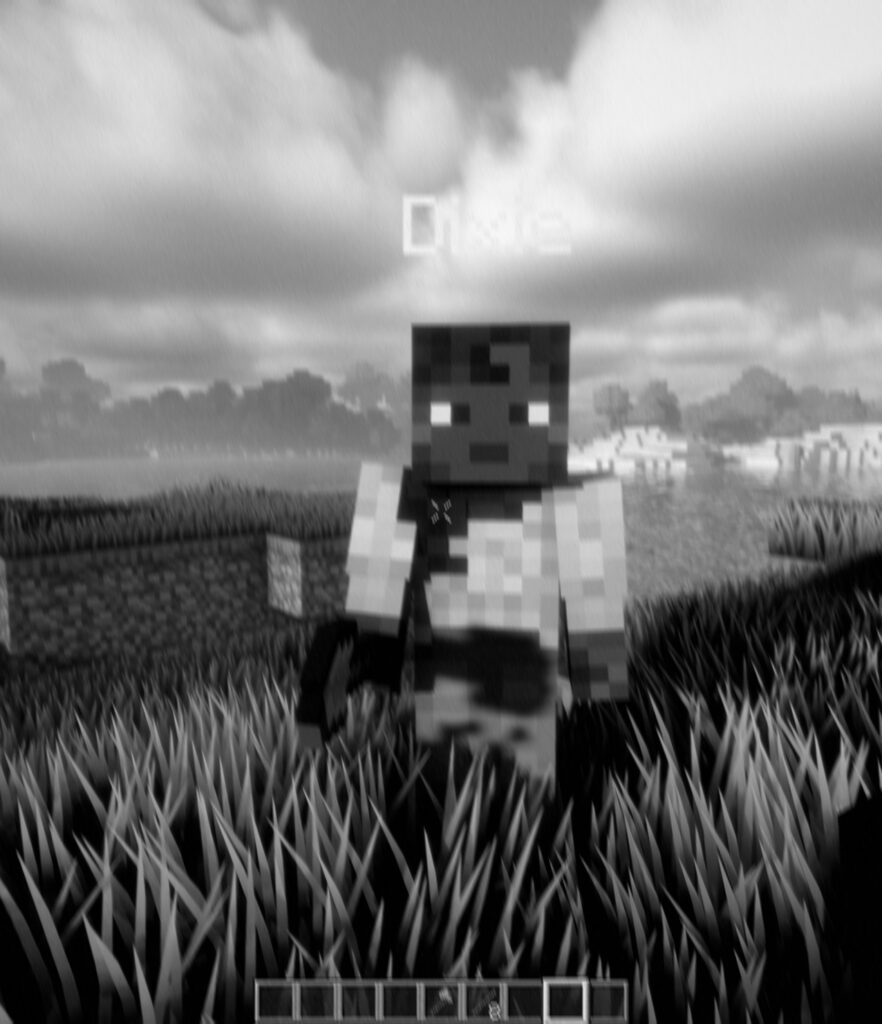
Getting it to run was hell. I had to rebuild my entire setup first. Different package managers, different versions… Reorganizing my whole toolbox, only to do one thing. Hours of it. And I couldn’t get it to run. That was the worst part.
It annoyed me. But the idea stuck. So I decided to build my own.
MCDS is what came out of that. Built from scratch. Meant to run.
What it looks like (current state)
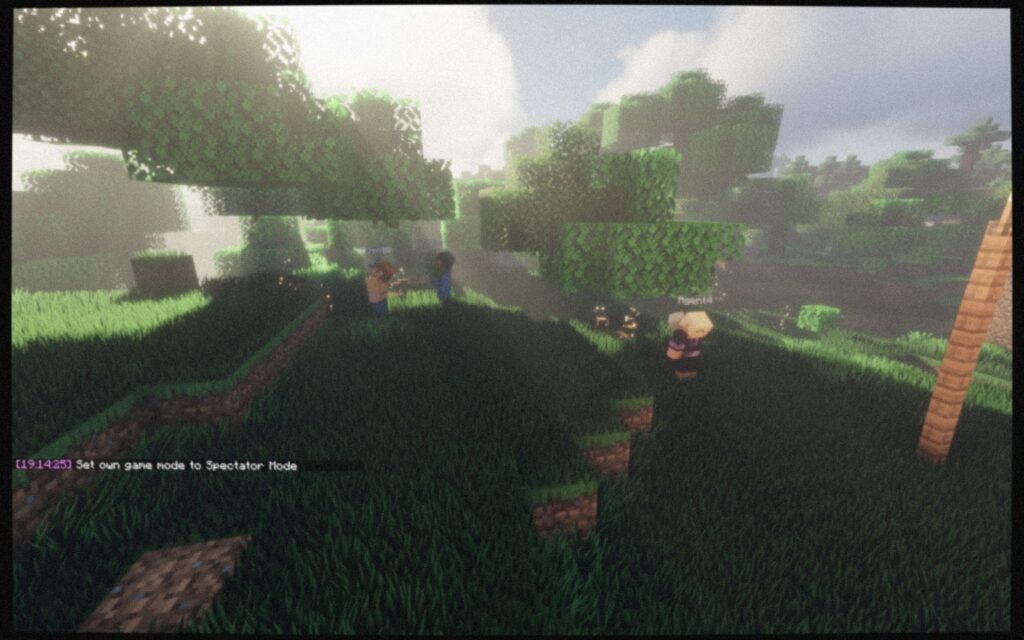
You join a server and spawn a bot (or twenty). You tell it to chop wood. It claims a tree — a second bot won’t get in its way. It reaches for the right and fastest tool on its own. If there is no tree, it starts exploring until it finds one.
Another bot walks 400 blocks across the map. Its view distance (16 blocks) doesn’t cover that. It navigates anyway, drops waypoints along the route, and when it hits a river, it swims through. Earlier prototypes would have drowned. After eleven versions, the bots survive.
The only interface you need is the in-game chat. Messages won’t go into an LLM. Your input gets parsed and out comes real objects that the program can utilize.
The problem
I researched the use of AI in Minecraft. From what I found, almost all of the demos and hobby projects let the LLM (large language model) steer the bot directly. When you chat with GPT, you type and then WAIT. You had to do the same with bots. You were WAITING. Every time. They couldn’t react. It was slow, and also cost money (tokens). I didn’t like that.
The solution: architecture (briefly)
MCDS is made up of two pillars and two substrates.
Pillar 1 — Execution. The 8-layer stack. Mineflayer at the base. On top: parser, tool layer, subsumption (survival beats UX, UX beats skill), execution monitor, a deterministic decision engine, and at the very top an LLM pipeline for autonomous strategy.
Pillar 2 — Social system. Not built yet. Needs-driven, with continuous scalars (trust, stress, fatigue), fast deterministic classifiers. The systems need to be fast and reactive, to properly interact with the game world.
Substrates. An event substrate holds past events, a world model holds the present space. Above that sits a world history as a passive, narrative substrate — built by its own LLM instance that observes and compresses over time.
The principle: structure before intelligence. The whole point is to build a reliable ecosystem, purely deterministic.
The infrastructure must never depend on the LLM. The LLM extends the system. It doesn’t replace it.
Where it stands today
Currently this is a one-person project. It will continue as such, until the architectural core is robust.
What’s working today: gatherers (digging, mining, chopping), resource claiming, long-distance navigation, swimming, exploration (solid for a single bot), bot behavior (spacing, eye contact), full job system (job board, multi-phase jobs, scheduler, routing, persistence), automatic tool selection, chest interaction. Structured logging, audit-ready.
The stack is stable up to layer 4, with a green test suite.
What comes next
Right now the project is in a renovation phase. Backlog bugfixes keep tearing open whole subsystems. Exploration is currently moving out of an FSM state into its own auditable subsystem.
The next big goal after the renovation is: Recursive Task Decomposition (breaking a bigger goal into smaller steps, automatically).
Context
GitHub is still private. A YouTube video is planned and will explain the project in more detail.